

Today I’m going to show you how to get more booth visitors, more qualified leads, and maximize your trade show ROI with a proven trade show marketing system.
By the end of this guide, you’ll learn the following:
- How to drive booth traffic with pre-show and on-site marketing strategies?
- How to convert more booth visitors into qualified sales opportunities?
- How to build a high-impact trade show marketing campaign, from A to Z?
- How to avoid costly mistakes that reduce exhibitor ROI?
- How to get more qualified leads and avoid wasting hundreds of unqualified business cards?
- How to convert booth visitors into sales opportunities with structured engagement and lead qualification techniques?
- How to get the most out of your trade show budget, marketing channels, and follow-up process?
- How to create a repeatable trade show marketing system you can use for every trade show you attend throughout the year?
So, what’s the secret behind successful exhibitors who consistently attract crowded booths and leave every trade show with high-quality leads?
It’s a structured framework I call the Trade Show Growth Blueprint™.
In this comprehensive handbook, I’ll guide you through the Trade Show Growth Blueprint™ from start to finish. This will help you establish clear goals. You will learn about marketing your exhibit prior to the show to engage visitors. This will also collect qualified leads and follow up successfully after the event.
How the Trade Show Growth Blueprint™ Helps You Increase Booth Traffic & Generate More Qualified Leads
Every successful trade show has a repeatable process. The exhibitors who always have crowded booths and leave with qualified leads aren’t relying on luck; they have a proven system. By applying the Trade Show Growth Blueprint™, you will have a repeatable system that helps you to attract the right crowd, engage your trade show display rentals’ visitors, and turn more conversations into qualified sales opportunities. Now, let’s walk through the Trade Show Growth Blueprint™ step by step and see exactly how to plan, promote, execute, and optimize your next trade show for maximum results.
The Trade Show Growth Blueprint™
It consists of five phases that work together to maximize booth traffic, improve visitor engagement, and increase qualified lead generation.
Part 1 — Trade Show Marketing Fundamentals
1. What Is Trade Show Marketing?
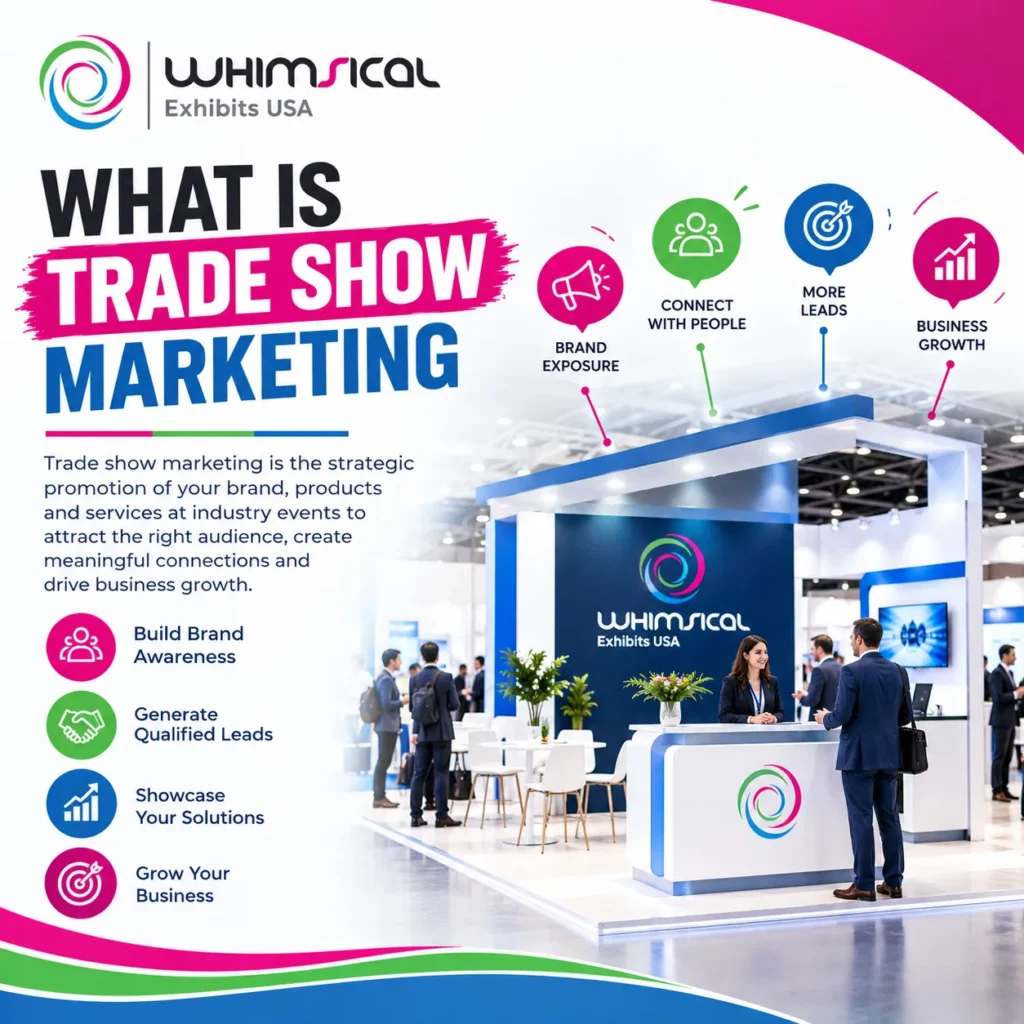
Trade show marketing is the complete spectrum of activities exhibitors engage in before, during, and after an exhibition. It attracts visitors, generates qualified leads, and converts those leads into revenue. Pre-show promotion and trade show display rentals design all the way through to onsite engagement and post-show follow-up are included, not simply the few days spent behind a booth.
Good trade show marketing is a repeatable system that turns a single event into the same visitor journey, the same qualification process, and the same follow-up sequence, refined a little more with each show you attend.
2. Why Trade Shows Still Matter in B2B Marketing
Digital ads and cold emails are at a boom, but trade shows are still one of the few channels where a prospect will spend real and undistracted time with your product and your team. The buyers, who attend the industry trade shows, are already self-selected. They have taken time off work and traveled specifically because they’re interested in the category you sell into.
And face-to-face conversation shortens the sales cycle too. A quick 10-minute chat in a booth can get as much done as two or three scheduled sales calls, and it builds trust in a way that’s hard to replicate over email or video.
3. Benefits of Trade Show Marketing
- Warm, self-qualified leads – attendees are already interested in your category before they reach your booth
- Faster sales cycles – in-person conversations move deals forward faster than cold outreach
- Direct competitive intelligence – you see competitor messaging, pricing, and positioning in real time
- Brand visibility – signage, demos, and speaking slots build awareness beyond just booth visitors
- Content generation – one event can fuel weeks of case studies, testimonials, photos, and social content
4. Types of Trade Shows
- Vertical (industry-specific) shows – focused on a single industry, e.g. healthcare or manufacturing — smaller audiences but highly qualified.
- Horizontal (broad) shows – cover a wide range of industries or job functions — larger audiences but more work to qualify
- Regional shows – smaller, local events — lower cost, useful for territory-based sales teams.
- National and international shows – larger scale, higher cost, best for brand-building and major launches.
- Tabletop and hybrid events – lower-cost formats combining a smaller physical presence with virtual attendee access.
5. Common Mistakes Exhibitors Make
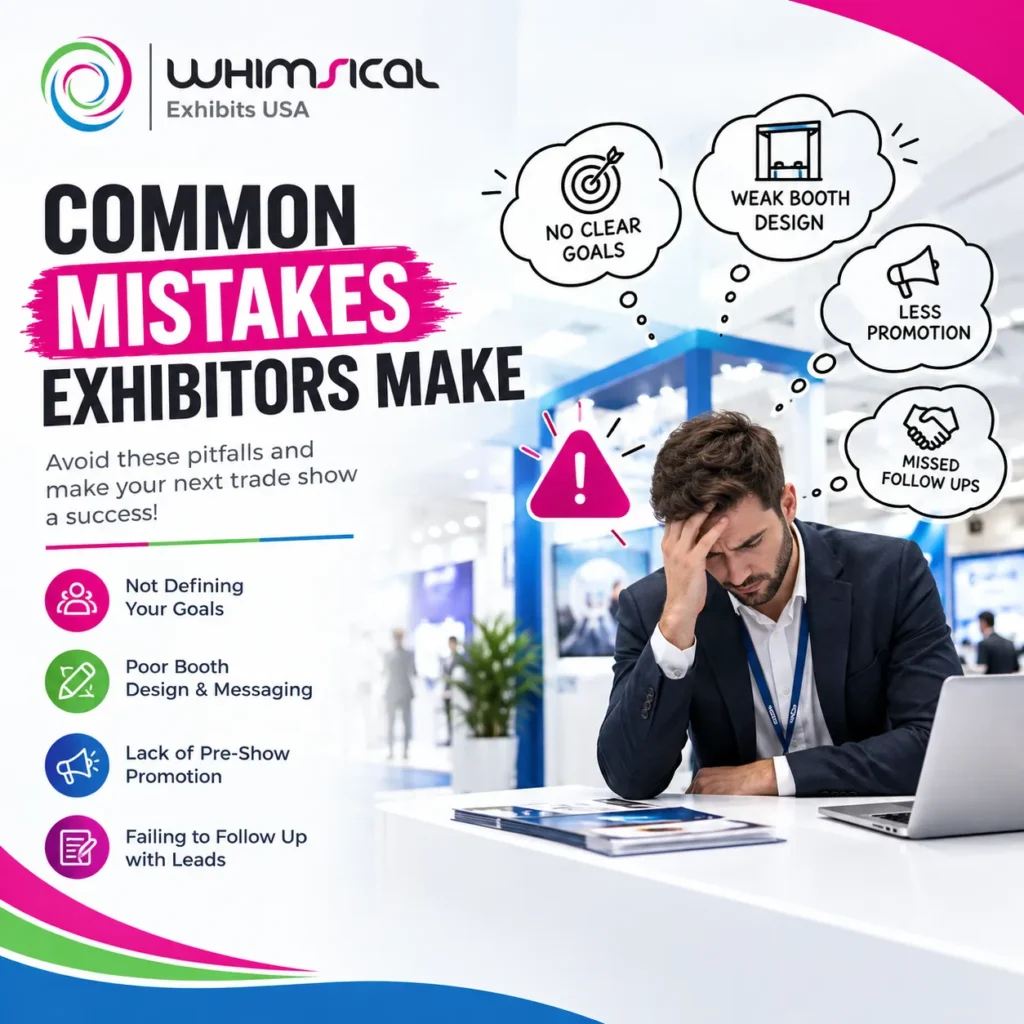
- Treating the show as a one-off event instead of a campaign – exhibitors who start marketing the week of the show consistently see lower booth traffic than those who start 60-90 days out.
- Prioritizing booth size over booth strategy – a smaller booth with a clear message and trained staff regularly outperforms a bigger booth with neither.
- Collecting business cards instead of qualified leads – a stack of 300 cards with no notes is far less valuable than 50 leads with clear next steps attached.
- Letting leads go cold after the show – leads followed up within 24-48 hours convert at meaningfully higher rates than leads contacted a week or more later.
- Never measuring ROI – without a clear formula and tracked numbers, it’s impossible to know whether a show is worth attending again next year.
6. The Trade Show Success Blueprint™
The Trade Show Success Blueprint™ is the master framework behind this guide. It combines two systems that most exhibitors run separately. It also often disconnected from each other but, it is a one continuous process –
1. The Marketing Engine – All that brings the right visitors to your booth (goal setting, audience research, pre-show promotion, and on-site engagement).
2. The Execution Engine – All the things that make sure your booth, staff, and logistics are actually ready. These are design approvals, vendor coordination, shipping, installation, etc.
If you run these two systems separately, you will have the two most common exhibitor failures. First, a beautifully marketed show and a booth that is not ready. The second is a perfectly built booth that no one knew to go see. And if you run these two together, they cover the whole exhibitor journey in three phases, i.e., Before the Show, During the Show, and After the Show.
Part 2 — Before the Show
7. Setting SMART Goals
Most exhibitors fail before the event even begins because they don’t have a clear strategy. Instead of saying “we want more leads,” set measurable goals such as –
Generate 150 qualified leads
Book 30 sales meetings
Close $100,000 in pipeline opportunities
Achieve a 35% lead qualification rate
Solution: Write your SMART goals down before you book the booth, not after — they should shape which show you choose, not just how you measure the one you’ve already booked.
8. Choosing the Right Trade Show
Evaluate previous attendance, visitor demographics, the exhibitor list, competitor participation, and historical ROI. Never choose a show based solely on attendance — the quality of attendees matters far more than the quantity.
If you’re deciding between two or three shows, score each one from 1 to 5 across those five factors. Any show scoring below 15 out of 25 usually isn’t worth the budget, no matter how big the attendance number looks on the website.
9. Understanding Your Target Audience
Identify the industries attending, job titles, buying intent, pain points, and purchasing authority. Most of this data is easier to find than exhibitors assume — start with the show organizer’s attendee demographic report, cross-reference it against your CRM’s closed-won deals, and use LinkedIn Sales Navigator to see how many target job titles are actually confirmed to attend.
10. Creating Buyer Personas
Turn your audience research into 2-3 simple personas — for example, “the hands-on evaluator” who wants a live demo, or “the economic buyer” who wants ROI numbers and case studies. Give each persona a name, a primary pain point, and the one question they’re most likely to ask at your booth. Brief your booth staff on all three so they can adjust their pitch within the first ten seconds of a conversation.
11. Planning Your Budget
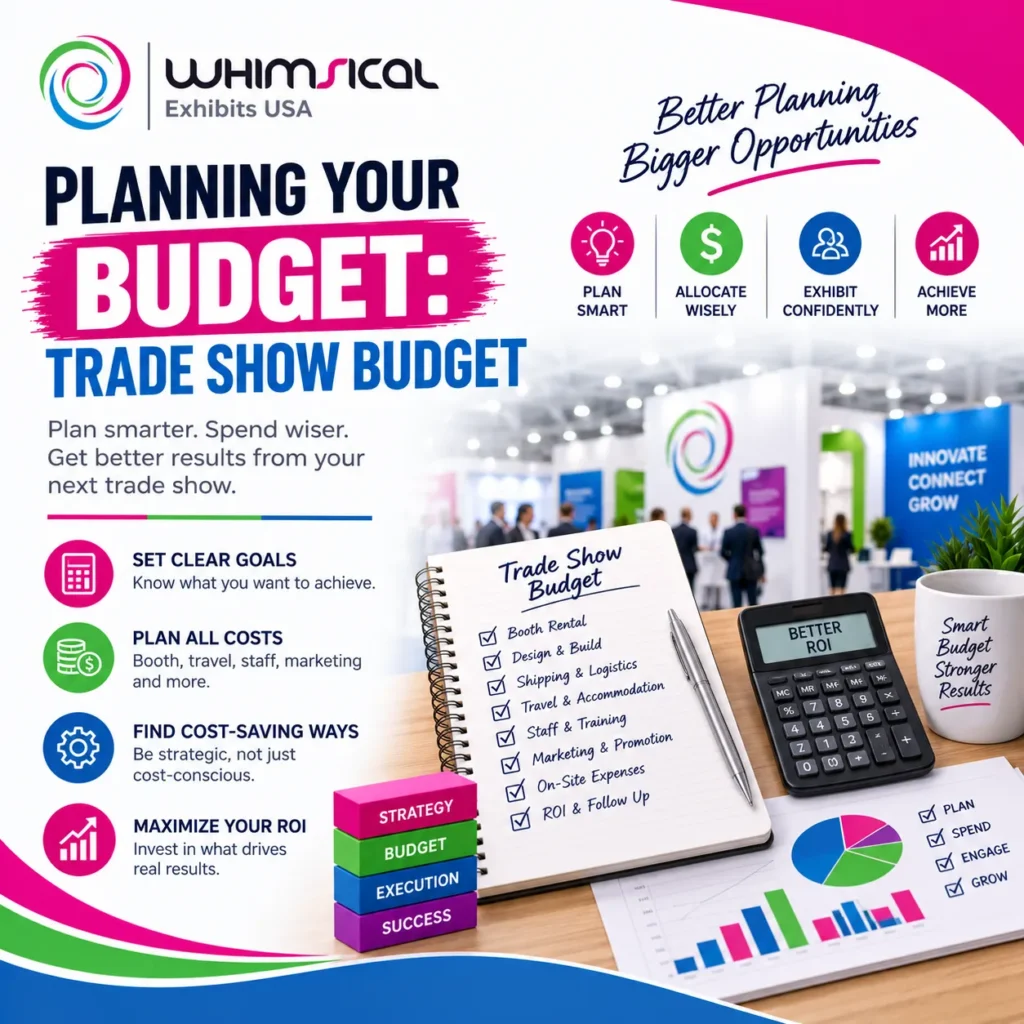
Your showcasing budget must include trade show display rentals, booth design, shipping and logistics, staff travel, marketing, giveaways, lead capture software, and contingency. Here is a balanced allocation for you –
35% for booth space
20% for booth design & build
15% for staff travel & accommodation
10% for pre-show marketing
10% for giveaways & swag
5% for lead capture software & tools
5% for contingency
12. Selecting the Best Booth Location
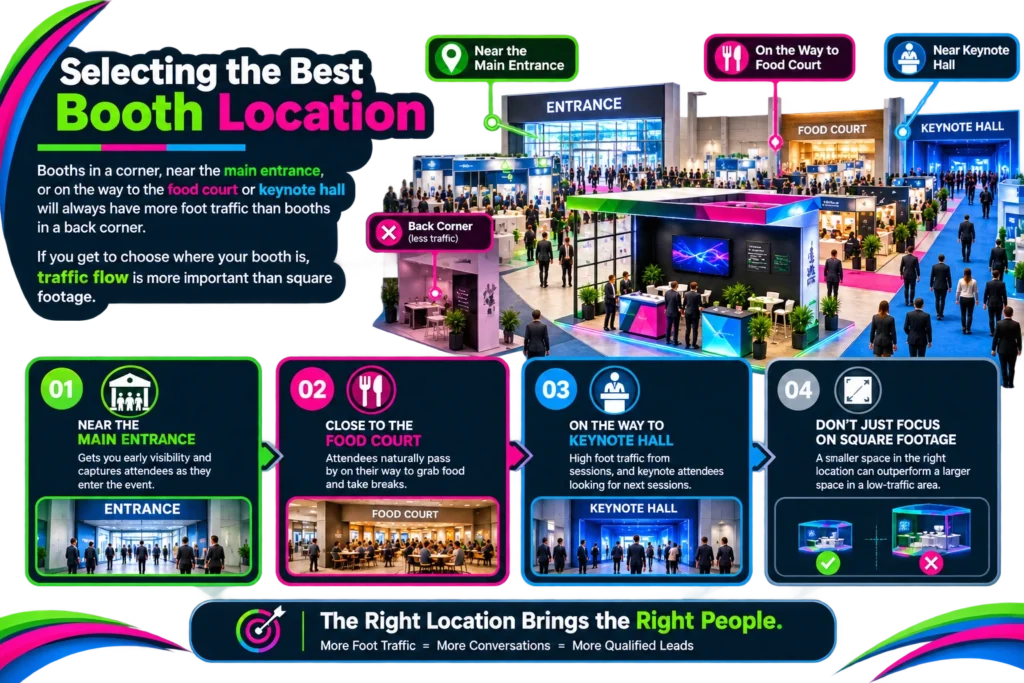
Booths in a corner, near the main entrance, or on the way to the food court or keynote hall will always have more foot traffic than booths in a back corner. If you get to choose where your booth is, traffic flow is more important than square footage.
13. Designing an Attention-Grabbing Booth
Use bold branding, elevated signage, digital displays, live demonstrations, and interactive screens. People are naturally drawn to crowds, so schedule demonstrations every 20-30 minutes to create continuous activity around your booth instead of one big demo that leaves long dead gaps in between.
14. Branding Your Exhibit
Before fabrication begins, review booth dimensions, branding placement, logo quality, product messaging, LED screen content, furniture layout, and storage areas as a complete package, not one by one. A booth where the branding, messaging, and layout were approved together reads as one consistent brand experience; approved in parts, it often looks like it.
Solution – Before sending final artwork to production, confirm print dimensions, convert fonts to outlines if required, check image resolution, review color consistency, and approve the final production proof. This single checklist catches most of the last-minute production fire drills exhibitors run into.
15. Building a High-Converting Trade Show Landing Page
Add the event name, your booth number, a meeting booking form, product highlights, team members attending, and a clear CTA to book a meeting. Keep it to one scroll and mobile-friendly. Exhibitors who jam every product line in tend to get less conversion than exhibitors who front one clear offer.
Landing pages that add a short countdown timer, cut the form down to 4 fields, include an early-bird pricing or registration deadline, and place 2-3 short video testimonials directly above the CTA consistently see the biggest jump in conversion rate — often close to doubling it.
16. Trade Show SEO
Target long-tail keywords like “[industry] trade show 2026” or “meet us at [event name]”. Add Event Schema markup to your landing page. Build internal links from relevant blog posts. This won’t be the bulk of your registrations, but it does tap into the segment of attendees that are actively seeking exhibitor information prior to the show.
17. Email Marketing Before the Event
Build a five-email sequence with subject lines that actually get opened –
- Email 1 (60 days out) – “We’ll be at [Event Name] — save your spot”
- Email 2 (30 days out) – “Meet us at Booth #214”
- Email 3 (14 days out) – “First look – what we’re launching at [Event Name]”
- Email 4 (5 days out) – “Last chance to book a 1 -1 meeting”
- Email 5 (1 day out) – “See you tomorrow — here’s where to find us”
18. Social Media Promotion
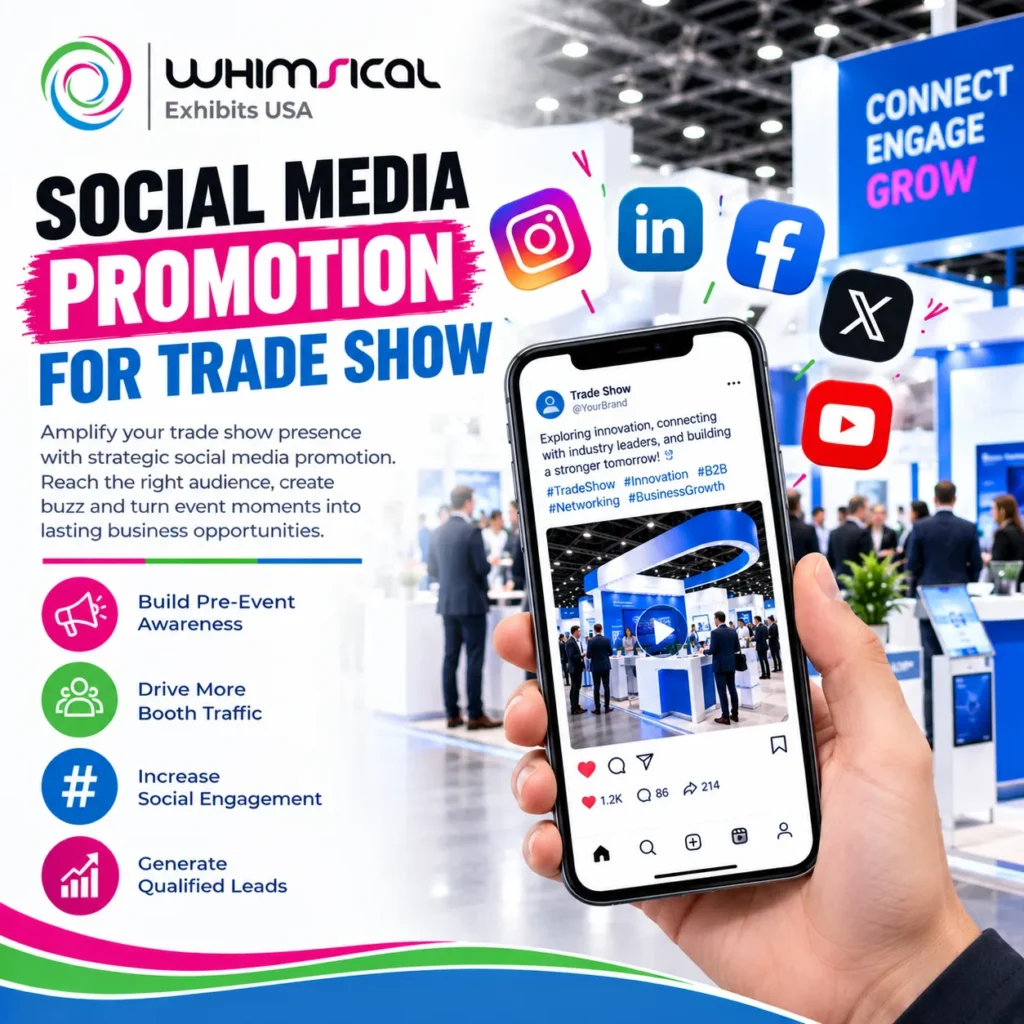
You should map your content to five checkpoints so the momentum keeps building instead of peaking once and going quiet.
- T-60 days – Announce your attendance and booth number.
- T-30 days – Announce the team who will be on-site.
- T-14 days – Share a sneak peek of what you’re launching or demoing.
- T-7 days – Post a countdown graphic with a clear CTA to book a meeting.
- T-1 day – Share your booth setup & last call.
19. Paid Advertising
Target past attendees, decision-makers, industry professionals and current customers using LinkedIn Ads by job title and industry. Combine this with a Google Search campaign focused on high-intent keywords. About 60 days out, when you’ve already got some traction with your organic efforts and email, add in paid promotion.
20. PR & Media Outreach
Most organizers offer co-marketing opportunities that exhibitors never ask about — inclusion in the official attendee newsletter, a speaking slot, or a feature in the event app. These placements typically cost far less than paid ads and carry more credibility because they come from the organizer, not your brand. If you’re launching a product at the show, pitch relevant trade publications 3-4 weeks out with an embargoed preview.
21. Booking Meetings Before the Show
Try to get 30-40% of your meetings booked before the show opens. This one metric does more to predict a strong show than nearly any other pre-show number. It means your team walks in with a full calendar instead of hoping the right people wander past the booth.
Part 3 — During the Show
22. Attract More Visitors
Even the best products won’t sell if no one stops at your booth. Train staff to avoid waiting behind counters — smile first, greet visitors within five seconds, ask open-ended questions, and start conversations instead of sales pitches.
Don’t say: “Can I help you?” (invites a one-word “no”)
Do say: “What brought you to our booth today?” (invites an actual conversation)
23. Live Demonstrations
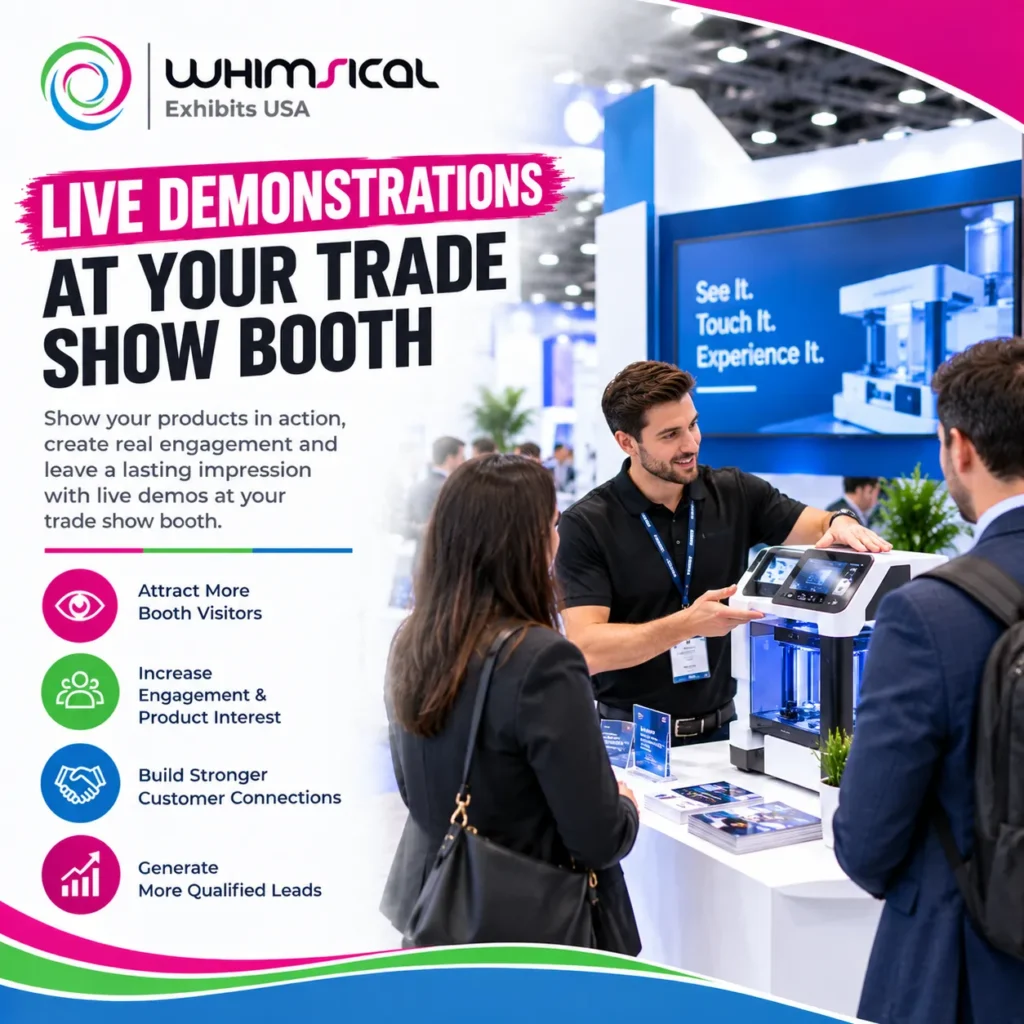
Schedule demos every 20-30 minutes on a visible timer or signage so passersby know exactly when the next one starts. A scheduled, predictable demo builds a small crowd on its own — an unscheduled one only catches whoever happens to be standing there.
24. Product Launches
If you’re launching something new at the show, tease it in your pre-show email and social sequence, but hold the full reveal for the booth itself. Give your booth staff a one-sentence answer to “What’s new?” so every team member tells the same story instead of five slightly different versions.
25. Gamification
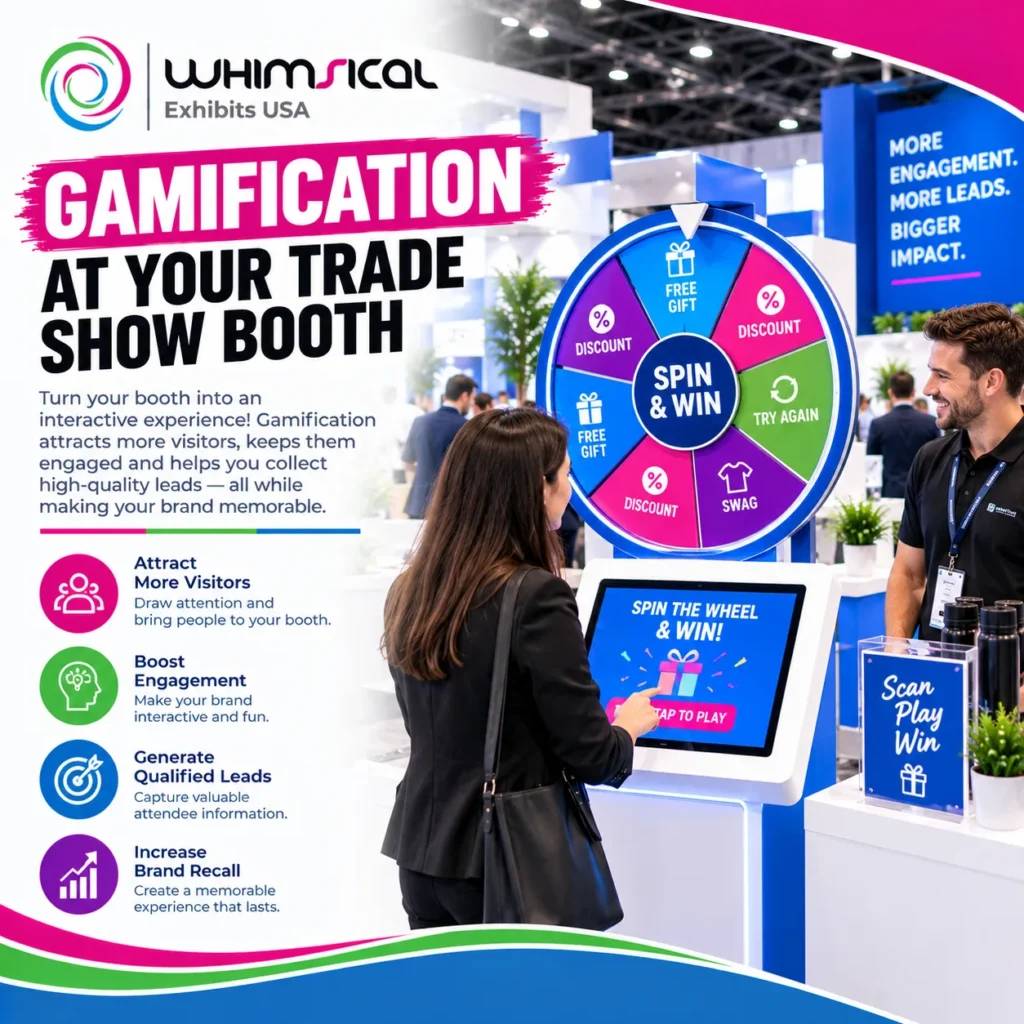
The best-performing interactive experiences tie directly back to the product instead of being a generic prize wheel. A cybersecurity vendor running a “spot the phishing email” challenge or a software company running a live “beat the clock” product demo both give visitors a reason to stop that also happens to sell the product.
26. Lead Capture Systems
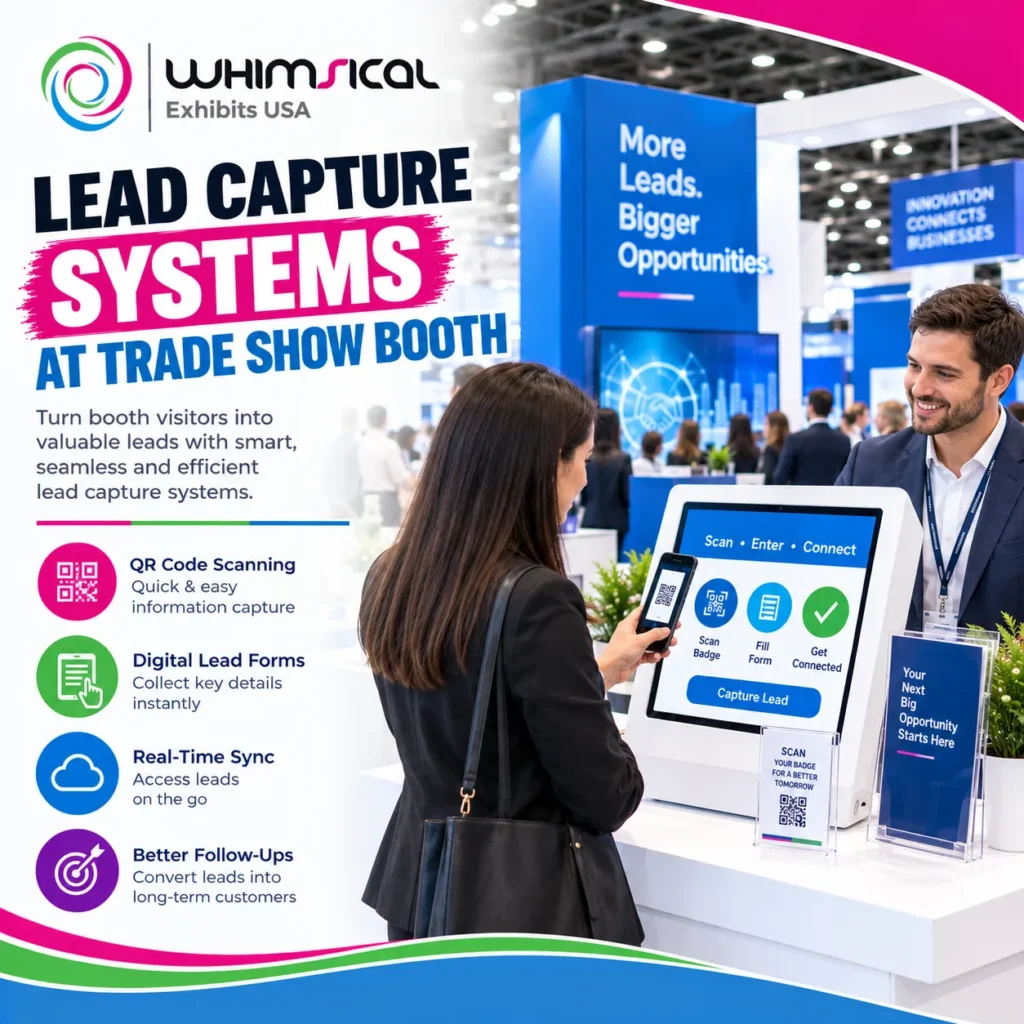
Skip the paper forms and fishbowls. A badge-scanning app or a simple tablet-based form captures cleaner data, syncs directly to your CRM, and lets you tag lead priority in real time — instead of trying to decipher handwriting three days after the show ends.
Record contact information, product interest, priority level, follow-up actions, and notes from the conversation for every single lead — not just the ones who seemed most interested.
27. Qualifying Leads
Instead of qualifying visitors from memory, run every conversation through the same four-question filter — what we call P.A.C.T. –
Problem – What challenge are they actively trying to solve?
Authority – Are they the buyer, an influencer, or just researching?
Cost – Do they have a budget allocated, even roughly?
Timeline – Are they buying this quarter, this year, or just browsing?
A visitor who scores well on all four is a hot lead who needs a meeting booked before they leave your booth. Never end a strong conversation with “we’ll follow up” — book the meeting, schedule the demo, or set a follow-up date before they walk away.
28. Networking Strategies
Some of the highest-value conversations at a trade show happen away from your own booth — in the hallway, at the networking reception, or in line for coffee. Set a simple goal for your team – two meaningful conversations with people outside your booth per day, focused on partners, press, or prospects you couldn’t otherwise reach.
29. Presentation Tips
If you have a speaking slot or stage demo, open with the specific problem your audience feels, not your company history. Keep slides visual and light on text, and end with one clear next step — visit booth #, scan this code, or book a meeting — not a generic “thanks for listening.”
30. QR Code Marketing
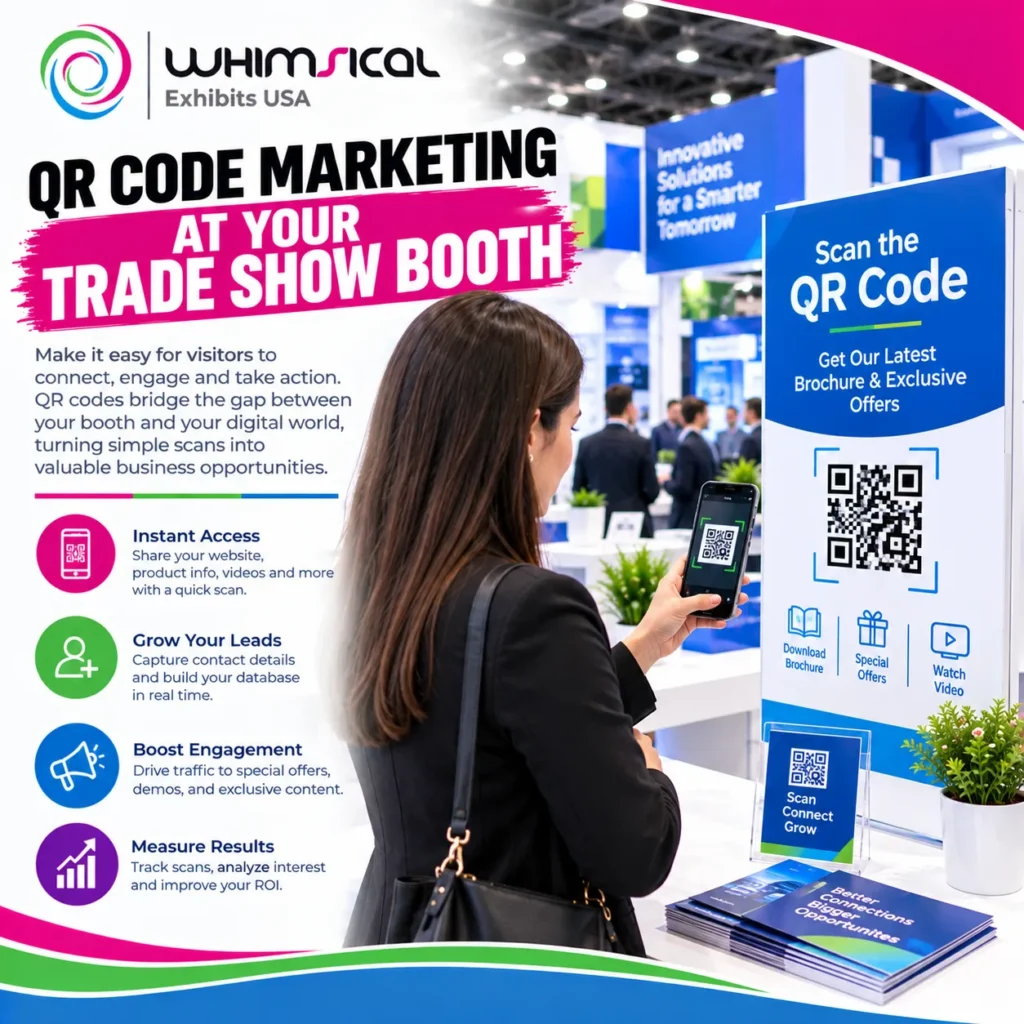
Use QR codes to link directly to a one-field lead capture form, a demo video, or a meeting booking page — not your homepage. A QR code that dumps a visitor onto a generic homepage wastes the one moment you had their full attention.
31. Giveaways That Generate Leads
Tie the giveaway to a completed action — a badge scan, a short demo, or a qualification question — rather than handing it out to anyone who walks past. A giveaway that requires 30 seconds of engagement filters out casual passersby and rewards the visitors actually worth talking to.
32. Photography & Video
Capture photos and short video clips of the booth, demos, and team throughout the show — not just a few phone snaps at the start. Get visitor quotes or soundbites on camera (with permission) whenever a conversation goes especially well; these become some of the most valuable content you bring home.
33. Real-Time Social Media
Post from the show floor as it happens — a demo clip, a busy-booth photo, a quick visitor quote — rather than saving everything for a single recap post afterward. Real-time posts reach people still deciding whether to stop by your booth later that same day.
Part 4 — After the Show
34. Lead Follow-Up Strategy
Send a thank-you email, product brochure, meeting summary and any promised resources within 24-48 hours of show closing. Here’s a simple template that trumps generic “thanks for stopping by” emails –
Subject – [First Name] It was a pleasure meeting you at [Event Name].
Hi [First Name], It was a pleasure discussing [specific problem they mentioned] at our booth yesterday. As promised here is [resource/demo link]. Do you have 15 minutes this week to walk thru how we’d take it for your team?
35. CRM Integration
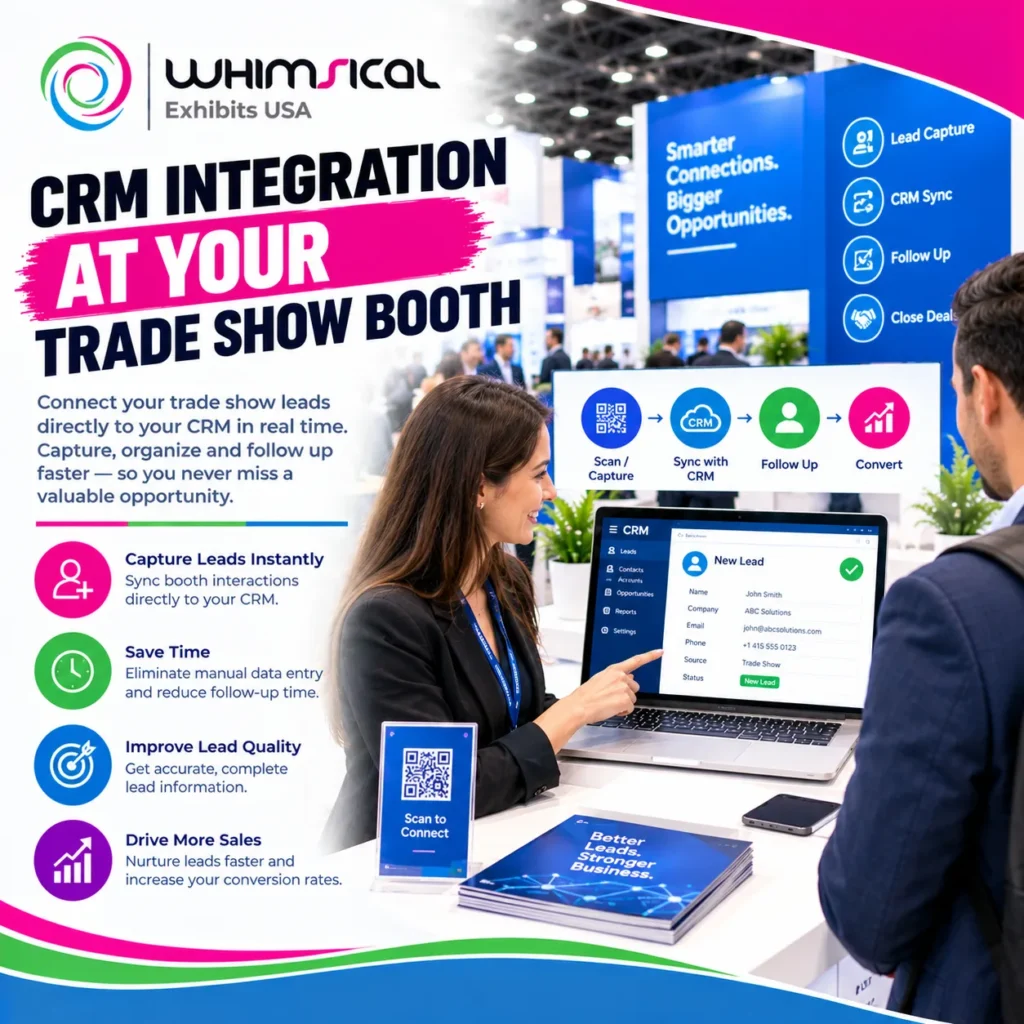
Every lead captured on-site should sync directly into your CRM with its P.A.C.T. score, priority tag, and conversation notes attached — not sit in a spreadsheet waiting to be manually imported days later. The faster a hot lead reaches a sales rep’s queue, the faster it gets a response.
36. Email Nurturing
Segment every lead into three groups and treat each differently –
Hot – Scored well on all 4 P.A.C.T. factors – follow up in 24 hours, try to schedule a meeting now
Warm – Clear problem and interest but budget or timeline unconfirmed. Follow up in 3-5 days with a case study or demo offer.
Cold – Early-stage research, no urgency. Add to a nurture sequence and follow up monthly.
37. Measuring ROI
ROI = (Revenue Generated − Total Trade Show Cost) ÷ Total Trade Show Cost × 100.
For example, if a $20,000 trade show investment generates $100,000 in closed-won or committed pipeline within six months, that’s a 400% ROI — a number worth tracking event over event so you can justify, or cut, your presence at each show.
38. KPIs Every Exhibitor Should Track
Booth visitors
Qualified leads
Meetings booked
Sales pipeline generated
Revenue generated
ROI
Solution – Track these six numbers in the same spreadsheet, event after event, so you can compare shows against each other — not just measure each one in isolation.
39. Repurposing Trade Show Content
A single trade show can fuel weeks of content if you plan for it. Before you leave, make sure you’ve captured photos and video clips, visitor quotes, and enough material for a recap blog post and a short case study once a booth conversation turns into a closed deal.
40. Continuous Improvement
Send a short feedback survey to your own booth team while the event is still fresh, review what worked and what didn’t against your original SMART goals, and feed those findings directly into planning for next year’s event. This is what turns a single trade show into a repeatable, improving system rather than a one-off campaign.
Conclusion
That’s the complete Trade Show Success Blueprint™ — every stage of the exhibitor journey, from setting your first SMART goal to calculating ROI after the show closes, combined into one system instead of two disconnected ones.
Instead of relying on last-minute promotions on one side and last-minute booth fixes on the other, you now have a complete process for every stage of the journey – plan and promote before the show, engage and qualify during the show, and follow up and measure after it ends.
The exhibitors who consistently win at trade shows don’t just build impressive booths or run clever campaigns — they run both halves of the process together, every single time.
Ready to Make Your Next Trade Show Your Most Successful One?
Start implementing the Trade Show Success Blueprint™ today and use this guide as your roadmap before, during, and after every exhibition.
If this guide proved helpful, share it with your team, colleagues, or fellow exhibitors, and keep it as your go-to resource for trade show marketing for future events.